This is not the latest marketing jargon! Of late, while zipping through TV channels during my post-MBA and pre-job break, I came across a few regional and national channels beaming shows (akin to the Telebrands shows). But the products being advertised are not the traditional consumer products or services for that matter. Some companies have realized that Hindu religious feelings which border on superstition for most Indian housewives (besides the uneducated and gullible men from small towns) can be leveraged to sell products like Shri Yantra, Rudraksh etc. These products (if you can call them so) were traditionally given by the saints/sanyasis to their devotees since centuries to ameliorate suffering of all kinds. It was given and accepted as something that had divine blessings in it. But with commercialisation of everything else around us, one can’t be surprised if somebody tries to commercialise God and make money in His name.
It’s not that there is no precedence for things like this in India. Over the past three decades, many fake sadhus and babas have duped the gullible and unassuming Indian public of their hard-earned money, all in the name of faith. We have had scores of Nithyanandas in India now and people still fall for such people and products with the belief that they will help them to get rid of their troubles. Nothing can be further from the truth.
Life is not rosy. In fact, everyone’s life has problems and the best way to deal with them is to be optimistic and honestly try to find solutions instead of buying such products. I don’t know if Rudrakshs and Shri Yantras of yore had any divine blessings or not but I can tell for sure that the modern Rudrakshs and Shri Yantras being sold via TV shows have devil’s blessings (which would certainly strip people of their cash).
It is high time the ASCI took some stringent action against companies which advertise such products. Awareness needs to be created to prevent more people from being hoodwinked and cheated of their money.

A platform where I will share my views on topics and issues that interest me deeply (with a strong business bias, of course)and chronicle the major events in my life beginning 2010.
Monday, May 2, 2011

Dhoni Demystified!
Hello readers.
It has been a long time since I posted anything on my blog. The World Cup victory and the subsequent hysteria is now behind us. I would try my best to decipher why MS Dhoni has been what he is today- India’s world cup winning captain besides being the world’s highest paid cricketer according to Forbes.
To begin with, Dhoni is a maverick. He believes in himself more than any other Indian cricketer I have ever seen. He is an excellent reader of the game. He understands tense situations, stays cool (sans emotions mostly) and takes calculated (at times very unconventional ) risks. According to him, one has to be different to be successful. He has got a 60% success rate in ODIs and he is easily India’s most successful captain ever. But he has also had his share of failures and embraced them with utmost sportsmanship.
I have been watching Dhoni very closely ever since he burst into the international scene in 2004 with a blistering 148* against Pakistan at Visakhapatnam (which happens to be the place where I did my entire schooling). His approach towards batting has matured from outright aggression to calculated strokeplay as per the needs of the team. He has improved his wicket-keeping skills over the years tremendously. I admit his batting has deteriorated over the past one year or so. But his innings in the WC final against Sri Lanka reminded us all of his gutsy brilliance.
I love his cool temperament which hides his aggression on the field, honesty ( he is not afraid to call a spade a spade) and smart thinking. He has been my idol ever since he started playing for India. After so many years, a guy from a small town made it big at the international scene and hogged the limelight (from Sachin Tendulkar). I don’t mean to compare the two. Tendulkar is a way better batsman when compared to Dhoni. But for the first time, a cricketer in India became more popular (as defined by endorsement fees) than Sachin and caught the fancy of an entire nation. Nobody could even dream of such popularity in the era of Tendulkar. Dhoni is an inspiration for all Indians, especially those from small towns and middle-class backgrounds sans any connections to make it big in whatever field they are in.
To sum up MSD is what he is today because of his smart and unconventional thinking, super cool temperament and tremendous self-belief besides of course, good (not great) cricketing (batting & wicket-keeping) talent. Watch out for more from the man who revolutionised Indian cricket.
Cheers,
Alok
It has been a long time since I posted anything on my blog. The World Cup victory and the subsequent hysteria is now behind us. I would try my best to decipher why MS Dhoni has been what he is today- India’s world cup winning captain besides being the world’s highest paid cricketer according to Forbes.
To begin with, Dhoni is a maverick. He believes in himself more than any other Indian cricketer I have ever seen. He is an excellent reader of the game. He understands tense situations, stays cool (sans emotions mostly) and takes calculated (at times very unconventional ) risks. According to him, one has to be different to be successful. He has got a 60% success rate in ODIs and he is easily India’s most successful captain ever. But he has also had his share of failures and embraced them with utmost sportsmanship.
I have been watching Dhoni very closely ever since he burst into the international scene in 2004 with a blistering 148* against Pakistan at Visakhapatnam (which happens to be the place where I did my entire schooling). His approach towards batting has matured from outright aggression to calculated strokeplay as per the needs of the team. He has improved his wicket-keeping skills over the years tremendously. I admit his batting has deteriorated over the past one year or so. But his innings in the WC final against Sri Lanka reminded us all of his gutsy brilliance.
I love his cool temperament which hides his aggression on the field, honesty ( he is not afraid to call a spade a spade) and smart thinking. He has been my idol ever since he started playing for India. After so many years, a guy from a small town made it big at the international scene and hogged the limelight (from Sachin Tendulkar). I don’t mean to compare the two. Tendulkar is a way better batsman when compared to Dhoni. But for the first time, a cricketer in India became more popular (as defined by endorsement fees) than Sachin and caught the fancy of an entire nation. Nobody could even dream of such popularity in the era of Tendulkar. Dhoni is an inspiration for all Indians, especially those from small towns and middle-class backgrounds sans any connections to make it big in whatever field they are in.
To sum up MSD is what he is today because of his smart and unconventional thinking, super cool temperament and tremendous self-belief besides of course, good (not great) cricketing (batting & wicket-keeping) talent. Watch out for more from the man who revolutionised Indian cricket.
Cheers,
Alok
Tuesday, February 15, 2011
Book Review- Rural & Social Marketing
In this post, I am going to review a book named “Tapping Rural Markets-Concepts and Cases” edited by Mr. V V Gopal (an IMT-Ghaziabad alumnus) and published by ICFAI University Press in 2005. It’s a tad lengthy but I am sure you will enjoy reading it.
The book provides a broad view of the rural market scenario in India as of 2005 and discusses the opportunities and challenges faced by marketers who venture into the arena. It is divided into two sections- Concepts and Cases, wherein the concepts of rural marketing and innovations and initiatives of leading consumer goods companies like ITC, Coca-Cola, HUL and LG are dicusses in detail.
Section 1: Concepts
1. Innovations in rural India- Jayatri Dasgupta
Being the source of livelihood for close to two-thirds (around 65 %) of the country’s population, rural India holds great potential for development. This article investigates why rural economy did not develop much in spite of the wide scope that agriculture and non-farming rural activities offered. Large-scale exploitation by private traders and middlemen and the lack of information dissemination to farmers on various important issues were identified as serious obstacles for rural development. Dasgupta highlights the success story of the cooperative movement in dairy production pioneered by AMUL. The setting up of agri-portals to open up information channels, distribution and procurement networks is also focused upon.
2. Understanding Rural Marketing- V V Gopal
Spotting the exciting opportunities of the rural markets, marketers are drawing elaborate plans to tap them. However, rural marketing is still at an embryonic stage. This article analyzes the reasons behind the scenario. It discusses various strategies adopted by marketers to influence the decision-making process and the buying behavoiour of the rural customer. CavinKare chik shampoo in 50 paise sachets and Coke Rs. 5 per bottle are just a few of the marketing strategies formulated by big marketers targeting the rural customers. The authoralso lays emphasis on the role of communication in promoting rural sales. He further opines that communicating in the local language captures the rural shoppers mind share as well as heart share resulting in the capture of wallet share.
3. Emerging Face of Rural Markets – Purba Basu
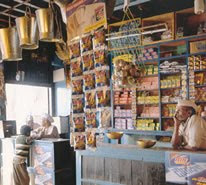
The rise of the rural markets has been the most important marketing phenomenon in the nineties. Leading consumer goods companies ventured into this segment the colume of growth it likely was going to offer. The article narrates how mass media have come in handy for FMCG companies to promote their products in rural markets. Various strategies adopted byu the retailers to attract the consumer. The need for product availability, enhancing awareness and increasing the buying power of the rural customers is emphasized in this article. The article also explains that product availability can affect decision of brand choice, volumes and market share. Creating awareness through advertisements, which touch the emotions of the rural consumers can drive a quantum jump in sales. Marketers are concentrating on tapping the untapped buyers which have tremendous purchasing power.

4. Tapping India’s Rural Market – Sara Huhmann
The open sale of foreign consumer products in India commenced during post liberalization period. Multinational companies view India as a market with great potential and opportunities for growth and promotion. This article addresses various issues relating to rural marketing such as understanding rural market formulating the strategies to be adopted to penetrate into segment and understanding the types of products and packages the rural consumers use. The buying behaviour of rural India revolves around the concept of ‘earn today and spend tomorrow’. Marketers are taking into account the low disposable incomes of the consumers and are coming up with unique packaging for such consumers such as ‘sachets’, priced at affordable level.
5. For a Brand New Rural India – Harish Bijoor
This article focuses on the challenges of marketing in rural India, which is multi- cultural, multi-faceted and populous. It differentiates rural India (real India) from urban India (Virtual India). The author opines that real India is today run by virtual India. It is moving very fast in the direction of the needs, aspirations, desires discovered by the man in rural India. Marketers have to adopt one of the two ways top create brand for the rural shopper – either the insensitive way or a sensitive way. Taking the urban brand and lowering the price, extending the brand to low unit packs etc constitute th einsensitive way. The sensitive way is all about taking the rough route of branding in the rural market while at the same time preserving rural India. The article suggest ways by which marketers can preserve the rural terrain but still create brands that are relevant to the needs of the rural man. It emphasizes the need to preserve the sanctity of the rural India.
6. Rural Promise - Sravanthi Challapalli
This article presents the distinct features of the rural markets and details how it is different from its urban counterpart. Rural Indians are keen to buy small packs. They are price and product conscious. They cling on to particular brand. In contrast to what is generally believed, disposable income in this segment is not low. The author opines that the yardstick applied to study urban India could provide pointers to rural India als0. Statistics show that rural India is rapidly moving from poverty to propensity opening the doors for marketers.
7. Rural Marketing is a Different Ballgame – Deepak Halan
When it comes to non-urban shoppers the marketing strategies formulated should be different from those that aim at their urban counterparts. This article narrates why establishing a rapport with rural consumers is important and discuss the research methodology that needs to be followed when catering to their needs. The author opines that identifying region-specific media, melas, developing regional messages and demonstrations facilitate the process of creating brand awareness among the rural folk. This article emphasizes that besides pffering products that specially cater to the needs of rural consumers, marketers need to understand that capturing rural markets involves focusing on low priced products.
8. Strategies for Rural Markets – T Sarathy and R Lakshmi Narayanan
The expanding rural markets are vital for the growth of many companies. Hindustan Uni Lever Ltd (HUL) is one among them. This article deals with various aspects relating to rural marketing in rural India, important among them being the market potential, rural reach and the budget allotment. Having understood the changing dynamics of the Indian market scenario and realizing that the rural consumer is now in a position to dictate terms, corporates are allocating a significant part of their budget to the rural markets. This article discusses the role of IT in this segment with reference to e-Choupal by ITC. Lack of infrastructure, low literacy levels and uncertain income of the rural consumers are some of the major challenges faced by the rural marketers.
Section II : Cases
1. ITC – M Rajshekar and Indrajit Gupta
This details the initiatives taken by this company to capture rural markets. Choupal Sagar is the first rural mall set up by the company. The outlet has an offer every commodity – from toothpastes to televisions, hair oils to motorcycles, shirts to fertilizers and many more. With its network of e-choupals, ITC gets in touch with the farmers through the Internet or VSAT lines and thus communicates the latest commodity prices. In case the farmers find these prices attractive, they sell their products to ITC. ITC has ushered in an information revolution catalyzed by choupals. The company is planning to set up a bank, cafeteria, an insurance office and a learning center to ensure that farmers visit Chaupal Sagar at all times, unlike the present situation, wherein they come only after harvest. ITC, with all present situation, wherein they come only after harvest. ITC with all its initiatives, succeeded in gauging rural consumers buying patterns.
2. Coca- Cola – K Subhadra
This details about the marketing strategy adopted by coca-cola to capture the rural market. The company proposed a strategy based on 3 A’s – Availability, Affordability and Acceptability. It adopted a hub and spoke distribution model to make coke available to rural consumers. Coke was transported to the hub from bottling plants and through them to the spokes in small towns. Coca-Cola launched a 200 ml ‘Chota Coke’ at a price affordable by rural consumers. The company ensured through its tv commercials and hoardings that consumers received and accepted them well. The case also presents the future plans of the company in penetrating further into rural markets.
3. LG – Dakshi Mohanty and T Phani Madhav
This traces the history of LG’s entry into India and examines its rural marketing initiatives. Though it had a presence in the Indian market since a few decades, LG focussed on rural marketing only from 2002. LG advertised its products all through the year. It also gave them an option of online shopping. As a unique marketing strategy, LG offered offices in the semi-urban and rural areas, known as central area offices (CAO) and remote area offices (RAO), which not only acted as sales offices but were also profit centers with decision making authority. The case details how LG succedded in its ventures by way of introducing a series of economy range products such as CinePlus along with Sampoorna CTVs and frostfree refrigerators. Through its novel strategy, “Different models, different channel”, LG operated into rural markets successfully.
4. SEWA – Reema Nanavaty
SEWA (Self-Employed Women’s Association) is a member based organization, which assists rural women producers realize the maximum financial benefits from their products and services. Out of its 1,67,000 members 1,01,000 are rural members. This article illustrates the measures taken up by SEWA to uplift the rural women who mostly come from the drought prone areas where their ability to produce goods for consumption and sale is severely affected by various factors including water shortages, etc. its strategy focuses on assisting rural women to bargain for better prices from middlemen, identifying the needs of the community and design programs that go hand-in-hand with the exiating government programs. SEWA also proposes to continuously invest in regular market surveys and market based research activities.
5. Hindustan Unilever Limited – N Gayatridevi
Project streamline is a rural distribution model for Hindustan Unilever Ltd. Owing the invasion of television, consumer awareness in rural India has increased. HUL is among companies that took rural marketing seriously. Having experienced a bitter loss in its business of toilet soaps, toothpastes, HUL realized that the future lay in tapping the enormous rural population. It then ventured into the rural markets with an intention to promote its products in the rural areas. Project Streamline was launched by the company with an objective to have an control over the rural distribution and thereby to increase the rural penetration. Then HUL went on to initiate “Project Shakti” to address the drawbacks of the project streamline, with an objective to respond to the buying behaviour of the rural consumers. It facilitated the reach and distribution process of the company. It also explains the marketshare and price of the product.
6. CavinKare – Gouri Shukla
Having understood the needs ad buying pattern of the rural consumers, CavinKare came up with an unique idea of selling its shampoo in “sachets”. The case illustrates how the company unshered in a revolution in consumer products through “Chik” – shampoo in low priced sachets. This filled the need gap in rural markets. The price sensitive rural consumer did not mind spending Re. 1 for a shampoo hair wash. The case then details CavinKare in order to consolidate its position went on to sell shampoos at 50 paise, and also launched a single use perfume at Rs. 2.
The book provides a broad view of the rural market scenario in India as of 2005 and discusses the opportunities and challenges faced by marketers who venture into the arena. It is divided into two sections- Concepts and Cases, wherein the concepts of rural marketing and innovations and initiatives of leading consumer goods companies like ITC, Coca-Cola, HUL and LG are dicusses in detail.
Section 1: Concepts
1. Innovations in rural India- Jayatri Dasgupta
Being the source of livelihood for close to two-thirds (around 65 %) of the country’s population, rural India holds great potential for development. This article investigates why rural economy did not develop much in spite of the wide scope that agriculture and non-farming rural activities offered. Large-scale exploitation by private traders and middlemen and the lack of information dissemination to farmers on various important issues were identified as serious obstacles for rural development. Dasgupta highlights the success story of the cooperative movement in dairy production pioneered by AMUL. The setting up of agri-portals to open up information channels, distribution and procurement networks is also focused upon.
2. Understanding Rural Marketing- V V Gopal
Spotting the exciting opportunities of the rural markets, marketers are drawing elaborate plans to tap them. However, rural marketing is still at an embryonic stage. This article analyzes the reasons behind the scenario. It discusses various strategies adopted by marketers to influence the decision-making process and the buying behavoiour of the rural customer. CavinKare chik shampoo in 50 paise sachets and Coke Rs. 5 per bottle are just a few of the marketing strategies formulated by big marketers targeting the rural customers. The authoralso lays emphasis on the role of communication in promoting rural sales. He further opines that communicating in the local language captures the rural shoppers mind share as well as heart share resulting in the capture of wallet share.

3. Emerging Face of Rural Markets – Purba Basu
The rise of the rural markets has been the most important marketing phenomenon in the nineties. Leading consumer goods companies ventured into this segment the colume of growth it likely was going to offer. The article narrates how mass media have come in handy for FMCG companies to promote their products in rural markets. Various strategies adopted byu the retailers to attract the consumer. The need for product availability, enhancing awareness and increasing the buying power of the rural customers is emphasized in this article. The article also explains that product availability can affect decision of brand choice, volumes and market share. Creating awareness through advertisements, which touch the emotions of the rural consumers can drive a quantum jump in sales. Marketers are concentrating on tapping the untapped buyers which have tremendous purchasing power.

4. Tapping India’s Rural Market – Sara Huhmann
The open sale of foreign consumer products in India commenced during post liberalization period. Multinational companies view India as a market with great potential and opportunities for growth and promotion. This article addresses various issues relating to rural marketing such as understanding rural market formulating the strategies to be adopted to penetrate into segment and understanding the types of products and packages the rural consumers use. The buying behaviour of rural India revolves around the concept of ‘earn today and spend tomorrow’. Marketers are taking into account the low disposable incomes of the consumers and are coming up with unique packaging for such consumers such as ‘sachets’, priced at affordable level.
5. For a Brand New Rural India – Harish Bijoor
This article focuses on the challenges of marketing in rural India, which is multi- cultural, multi-faceted and populous. It differentiates rural India (real India) from urban India (Virtual India). The author opines that real India is today run by virtual India. It is moving very fast in the direction of the needs, aspirations, desires discovered by the man in rural India. Marketers have to adopt one of the two ways top create brand for the rural shopper – either the insensitive way or a sensitive way. Taking the urban brand and lowering the price, extending the brand to low unit packs etc constitute th einsensitive way. The sensitive way is all about taking the rough route of branding in the rural market while at the same time preserving rural India. The article suggest ways by which marketers can preserve the rural terrain but still create brands that are relevant to the needs of the rural man. It emphasizes the need to preserve the sanctity of the rural India.
6. Rural Promise - Sravanthi Challapalli
This article presents the distinct features of the rural markets and details how it is different from its urban counterpart. Rural Indians are keen to buy small packs. They are price and product conscious. They cling on to particular brand. In contrast to what is generally believed, disposable income in this segment is not low. The author opines that the yardstick applied to study urban India could provide pointers to rural India als0. Statistics show that rural India is rapidly moving from poverty to propensity opening the doors for marketers.
7. Rural Marketing is a Different Ballgame – Deepak Halan
When it comes to non-urban shoppers the marketing strategies formulated should be different from those that aim at their urban counterparts. This article narrates why establishing a rapport with rural consumers is important and discuss the research methodology that needs to be followed when catering to their needs. The author opines that identifying region-specific media, melas, developing regional messages and demonstrations facilitate the process of creating brand awareness among the rural folk. This article emphasizes that besides pffering products that specially cater to the needs of rural consumers, marketers need to understand that capturing rural markets involves focusing on low priced products.
8. Strategies for Rural Markets – T Sarathy and R Lakshmi Narayanan
The expanding rural markets are vital for the growth of many companies. Hindustan Uni Lever Ltd (HUL) is one among them. This article deals with various aspects relating to rural marketing in rural India, important among them being the market potential, rural reach and the budget allotment. Having understood the changing dynamics of the Indian market scenario and realizing that the rural consumer is now in a position to dictate terms, corporates are allocating a significant part of their budget to the rural markets. This article discusses the role of IT in this segment with reference to e-Choupal by ITC. Lack of infrastructure, low literacy levels and uncertain income of the rural consumers are some of the major challenges faced by the rural marketers.
Section II : Cases
1. ITC – M Rajshekar and Indrajit Gupta
This details the initiatives taken by this company to capture rural markets. Choupal Sagar is the first rural mall set up by the company. The outlet has an offer every commodity – from toothpastes to televisions, hair oils to motorcycles, shirts to fertilizers and many more. With its network of e-choupals, ITC gets in touch with the farmers through the Internet or VSAT lines and thus communicates the latest commodity prices. In case the farmers find these prices attractive, they sell their products to ITC. ITC has ushered in an information revolution catalyzed by choupals. The company is planning to set up a bank, cafeteria, an insurance office and a learning center to ensure that farmers visit Chaupal Sagar at all times, unlike the present situation, wherein they come only after harvest. ITC, with all present situation, wherein they come only after harvest. ITC with all its initiatives, succeeded in gauging rural consumers buying patterns.
2. Coca- Cola – K Subhadra
This details about the marketing strategy adopted by coca-cola to capture the rural market. The company proposed a strategy based on 3 A’s – Availability, Affordability and Acceptability. It adopted a hub and spoke distribution model to make coke available to rural consumers. Coke was transported to the hub from bottling plants and through them to the spokes in small towns. Coca-Cola launched a 200 ml ‘Chota Coke’ at a price affordable by rural consumers. The company ensured through its tv commercials and hoardings that consumers received and accepted them well. The case also presents the future plans of the company in penetrating further into rural markets.
3. LG – Dakshi Mohanty and T Phani Madhav
This traces the history of LG’s entry into India and examines its rural marketing initiatives. Though it had a presence in the Indian market since a few decades, LG focussed on rural marketing only from 2002. LG advertised its products all through the year. It also gave them an option of online shopping. As a unique marketing strategy, LG offered offices in the semi-urban and rural areas, known as central area offices (CAO) and remote area offices (RAO), which not only acted as sales offices but were also profit centers with decision making authority. The case details how LG succedded in its ventures by way of introducing a series of economy range products such as CinePlus along with Sampoorna CTVs and frostfree refrigerators. Through its novel strategy, “Different models, different channel”, LG operated into rural markets successfully.
4. SEWA – Reema Nanavaty
SEWA (Self-Employed Women’s Association) is a member based organization, which assists rural women producers realize the maximum financial benefits from their products and services. Out of its 1,67,000 members 1,01,000 are rural members. This article illustrates the measures taken up by SEWA to uplift the rural women who mostly come from the drought prone areas where their ability to produce goods for consumption and sale is severely affected by various factors including water shortages, etc. its strategy focuses on assisting rural women to bargain for better prices from middlemen, identifying the needs of the community and design programs that go hand-in-hand with the exiating government programs. SEWA also proposes to continuously invest in regular market surveys and market based research activities.
5. Hindustan Unilever Limited – N Gayatridevi
Project streamline is a rural distribution model for Hindustan Unilever Ltd. Owing the invasion of television, consumer awareness in rural India has increased. HUL is among companies that took rural marketing seriously. Having experienced a bitter loss in its business of toilet soaps, toothpastes, HUL realized that the future lay in tapping the enormous rural population. It then ventured into the rural markets with an intention to promote its products in the rural areas. Project Streamline was launched by the company with an objective to have an control over the rural distribution and thereby to increase the rural penetration. Then HUL went on to initiate “Project Shakti” to address the drawbacks of the project streamline, with an objective to respond to the buying behaviour of the rural consumers. It facilitated the reach and distribution process of the company. It also explains the marketshare and price of the product.
6. CavinKare – Gouri Shukla
Having understood the needs ad buying pattern of the rural consumers, CavinKare came up with an unique idea of selling its shampoo in “sachets”. The case illustrates how the company unshered in a revolution in consumer products through “Chik” – shampoo in low priced sachets. This filled the need gap in rural markets. The price sensitive rural consumer did not mind spending Re. 1 for a shampoo hair wash. The case then details CavinKare in order to consolidate its position went on to sell shampoos at 50 paise, and also launched a single use perfume at Rs. 2.
Sunday, December 26, 2010
FDI in retail?
A question that has been in the media for quite some time now. After some study and introspection, this is what I think about it:
FDI must be allowed in all forms of retail in India:
1. Single-brand retail : 51% should be hiked to 100%
2. Cash-and-carry : 100% FDI status quo be maintained
3. Multi brand retail : No FDI currently, initially 49% should be allowed. Later depending on the expansion and macro environment factors, it can gradually go up to 74% and finally 100%.
FDI in multi brand retail should be opened up gradually. The government should allow 49% initially so that large MNC retail giants can forge tie ups with big local players in India. This would help in technology transfer, strengthening of supply chain systems and bring fresh capital that is badly needed for expansion. Between 30-40% of post-harvest produce goes to waste in a country where nearly half the people are malnourished. This would help tame double-digit food inflation that pushed the central bank to raise rates five times since March. A more organised retail sector, which currently is only around 5% of total retail, would also improve tax receipts. The move could generate huge employment in the multi-brand retail sector and, while fears of job losses for smaller outlets are real, analysts have often played down the impact. Farmers may also benefit because they could sell direct rather than relying on middle men. Political unrest would be near-inevitable. Manmohan's government has grappled with huge strikes and protests over soaring food prices and fuel reforms. Even if he pushed the reform through, huge upheaval could force the government to backtrack.Like insurance, retail is a capital-intensive business and hence FDI is a must.
However, the govt. needs to realize that allowing FDI in multi brand retail is not going to be the PANACEA. The rural agricultural infrastructure is far from acceptable standards in India. Expecting retailers to turn around everything is not realistic. Hence significant investments should go into improving the rural agricultural infrastructure. Only then will the farm-to-fork model of modern retail yield its benefits fully and rein in the spectre of inflation.
FDI must be allowed in all forms of retail in India:
1. Single-brand retail : 51% should be hiked to 100%
2. Cash-and-carry : 100% FDI status quo be maintained
3. Multi brand retail : No FDI currently, initially 49% should be allowed. Later depending on the expansion and macro environment factors, it can gradually go up to 74% and finally 100%.
FDI in multi brand retail should be opened up gradually. The government should allow 49% initially so that large MNC retail giants can forge tie ups with big local players in India. This would help in technology transfer, strengthening of supply chain systems and bring fresh capital that is badly needed for expansion. Between 30-40% of post-harvest produce goes to waste in a country where nearly half the people are malnourished. This would help tame double-digit food inflation that pushed the central bank to raise rates five times since March. A more organised retail sector, which currently is only around 5% of total retail, would also improve tax receipts. The move could generate huge employment in the multi-brand retail sector and, while fears of job losses for smaller outlets are real, analysts have often played down the impact. Farmers may also benefit because they could sell direct rather than relying on middle men. Political unrest would be near-inevitable. Manmohan's government has grappled with huge strikes and protests over soaring food prices and fuel reforms. Even if he pushed the reform through, huge upheaval could force the government to backtrack.Like insurance, retail is a capital-intensive business and hence FDI is a must.
However, the govt. needs to realize that allowing FDI in multi brand retail is not going to be the PANACEA. The rural agricultural infrastructure is far from acceptable standards in India. Expecting retailers to turn around everything is not realistic. Hence significant investments should go into improving the rural agricultural infrastructure. Only then will the farm-to-fork model of modern retail yield its benefits fully and rein in the spectre of inflation.
Friday, December 17, 2010
The Big "P" and more...
Hello readers!
It has been a long time since I posted anything. The Big "P" stands for PLACEMENT in all B-schools. Thanks to Nitish who coined this term (as if we needed one more P after the 8 Ps in services marketing! ). The term-5 of PGDM (MBA) has come to an end and I am cooling off my heels for a day before the final term sessions get underway.This term has been the most eventful and exciting for me and most of my friends would concur with this as well. I have got a job offer from Pantaloon Retail India Limited, the flagship company of Future Group, India's largest retailer in terms of number of stores and revenues (over $ 2.1 billion in FY 2010). Most of my friends here at SDMIMD have bagged jobs and that's one more reason to rejoice. Very soon, India Inc. will get a new set of high potential-high performing (STAR) managers!
The whole placement process taught me that one needs to be patient, well prepared and a little lucky to get the offer from a company. The process involves multiple trade-offs between conflicting parameters like salary, profile, location, company brand, CGPA and industry dynamics. A lot depends on the schedule of companies coming to campus (as we follow rolling placement system here at SDMIMD) and the risk appetite of the student.Also a few of my batchmates are determined to start their own ventures or expand their parent's businesses which is a welcome sign as India needs such wealth creators more than corporate managers.
The whole concept of putting students on HOLD by recruiters really sucks. It puts undue pressure on the young students and speaks poorly of a company's recruitment policies.
The annual management fest of SDMIMD is going to be conducted from January 6 to 8, 2011 here at SDMIMD campus in Mysore. Loads of events are on the anvil. Preparations are on and I will update you all on this soon.
Cheers!
It has been a long time since I posted anything. The Big "P" stands for PLACEMENT in all B-schools. Thanks to Nitish who coined this term (as if we needed one more P after the 8 Ps in services marketing! ). The term-5 of PGDM (MBA) has come to an end and I am cooling off my heels for a day before the final term sessions get underway.This term has been the most eventful and exciting for me and most of my friends would concur with this as well. I have got a job offer from Pantaloon Retail India Limited, the flagship company of Future Group, India's largest retailer in terms of number of stores and revenues (over $ 2.1 billion in FY 2010). Most of my friends here at SDMIMD have bagged jobs and that's one more reason to rejoice. Very soon, India Inc. will get a new set of high potential-high performing (STAR) managers!
The whole placement process taught me that one needs to be patient, well prepared and a little lucky to get the offer from a company. The process involves multiple trade-offs between conflicting parameters like salary, profile, location, company brand, CGPA and industry dynamics. A lot depends on the schedule of companies coming to campus (as we follow rolling placement system here at SDMIMD) and the risk appetite of the student.Also a few of my batchmates are determined to start their own ventures or expand their parent's businesses which is a welcome sign as India needs such wealth creators more than corporate managers.
The whole concept of putting students on HOLD by recruiters really sucks. It puts undue pressure on the young students and speaks poorly of a company's recruitment policies.
The annual management fest of SDMIMD is going to be conducted from January 6 to 8, 2011 here at SDMIMD campus in Mysore. Loads of events are on the anvil. Preparations are on and I will update you all on this soon.
Cheers!
Thursday, November 25, 2010
Management Gyaan!!!
Dear friends, in the words of my friend Anupam, we are the "future" managers of our country. So let me share some management lessons that we never get in MBA classrooms....in an entertaining fashion....all the credit or discredit goes to the copyright owner Mr. Anupam Niyogi!
ENJOYYYYYYY !!!!!!!
* Lesson Number One*
A crow was sitting on a tree, doing nothing all day. A small rabbitsaw the crow, and asked him, "Can I also sit like you and do nothingall day long?" The crow answered: "Sure, why not." So, the rabbit sat on the ground below the crow, and rested. All of a sudden, a fox appeared, jumped on the rabbit and ate it.
Management Lesson: To be sitting and doing nothing, you must besitting very, very high up. .
* Lesson Number Two *
A turkey was chatting with a bull.
"I would love to be able to get to the top of that tree," sighed the turkey, "but I haven't got the energy. "Well, why don't you nibble on some of my droppings?" replied the bull. "They're packed with nutrients."The turkey pecked at a lump of dung and found that it actually gave him enough strength to reach the first branch of the tree. The nextday, after eating some more dung, he reached the second branch. Finally after a fortnight, there he was proudly perched at the top ofthe tree. Soon he was promptly spotted by a farmer, who shot the turkey out of the tree.
Management Lesson: Bullshit might get you to the top, but it won'tkeep you there.
* Lesson Number Three *
When the body was first made, all the parts wanted to be Boss. Thebrain said, "I should be Boss because I control the whole body'sresponses and functions."
The feet said, "We should be Boss as we carry the brain about and gethim to where he wants to go." The hands said, "We should be the Bossbecause we do all the work and earn all the money." And so it went onand on with the heart, the lungs and the eyes until finally theasshole spoke up. All the parts laughed at the idea of the asshole being the Boss. Sothe asshole went on strike, blocked itself up and refused to work.Within a short time the eyes became crossed, the hands clenched, thefeet twitched, the heart and lungs began to panic and the brain fevered. Eventually they all decided that the asshole should be theBoss, so the motion was passed.
All the other parts did all the work while the Boss just sat andpassed out the shit!
Management Lesson: You don't need brains to be Boss, any asshole will do! You just need to screw people at the right moment.
* Lesson Number Four *
A little bird was flying south for the winter. It was so cold, thebird froze and fell to the ground in a large field. While it was lyingthere, a cow came by and dropped some dung on it. As the frozen birdlay there in the pile of cow dung, it began to realize how warm itwas. The dung was actually thawing him out!
He lay there all warm and happy, and soon began to sing for joy. A passing cat heard he bird singing and came to investigate. Following the sound, the cat discovered the bird under the pile of cow dung, and promptly dug him out of the shit and ate him!
Management Lessons
A) Not everyone who drops shit on you is your enemy.
B) Not everyone who gets you out of shit is your friend.
C) When you're in deep shit, you better keep your mouth shut!
PS: THESE ARE PROVEN FACTS AND SHOULD BE KNOWN TO EVERY MANAGER.....
ENJOYYYYYYY !!!!!!!
* Lesson Number One*
A crow was sitting on a tree, doing nothing all day. A small rabbitsaw the crow, and asked him, "Can I also sit like you and do nothingall day long?" The crow answered: "Sure, why not." So, the rabbit sat on the ground below the crow, and rested. All of a sudden, a fox appeared, jumped on the rabbit and ate it.
Management Lesson: To be sitting and doing nothing, you must besitting very, very high up. .
* Lesson Number Two *
A turkey was chatting with a bull.
"I would love to be able to get to the top of that tree," sighed the turkey, "but I haven't got the energy. "Well, why don't you nibble on some of my droppings?" replied the bull. "They're packed with nutrients."The turkey pecked at a lump of dung and found that it actually gave him enough strength to reach the first branch of the tree. The nextday, after eating some more dung, he reached the second branch. Finally after a fortnight, there he was proudly perched at the top ofthe tree. Soon he was promptly spotted by a farmer, who shot the turkey out of the tree.
Management Lesson: Bullshit might get you to the top, but it won'tkeep you there.
* Lesson Number Three *
When the body was first made, all the parts wanted to be Boss. Thebrain said, "I should be Boss because I control the whole body'sresponses and functions."
The feet said, "We should be Boss as we carry the brain about and gethim to where he wants to go." The hands said, "We should be the Bossbecause we do all the work and earn all the money." And so it went onand on with the heart, the lungs and the eyes until finally theasshole spoke up. All the parts laughed at the idea of the asshole being the Boss. Sothe asshole went on strike, blocked itself up and refused to work.Within a short time the eyes became crossed, the hands clenched, thefeet twitched, the heart and lungs began to panic and the brain fevered. Eventually they all decided that the asshole should be theBoss, so the motion was passed.
All the other parts did all the work while the Boss just sat andpassed out the shit!
Management Lesson: You don't need brains to be Boss, any asshole will do! You just need to screw people at the right moment.
* Lesson Number Four *
A little bird was flying south for the winter. It was so cold, thebird froze and fell to the ground in a large field. While it was lyingthere, a cow came by and dropped some dung on it. As the frozen birdlay there in the pile of cow dung, it began to realize how warm itwas. The dung was actually thawing him out!
He lay there all warm and happy, and soon began to sing for joy. A passing cat heard he bird singing and came to investigate. Following the sound, the cat discovered the bird under the pile of cow dung, and promptly dug him out of the shit and ate him!
Management Lessons
A) Not everyone who drops shit on you is your enemy.
B) Not everyone who gets you out of shit is your friend.
C) When you're in deep shit, you better keep your mouth shut!
PS: THESE ARE PROVEN FACTS AND SHOULD BE KNOWN TO EVERY MANAGER.....
Wednesday, November 10, 2010
My favourite poems
Two poems that have influenced and touched me to the core are posted below. Hope these will do my readers some good.Looking forward to your comments and suggestions.
INVICTUS
---William E. Henley
Out of the night that covers me,
Black as the pit from pole to pole,
I thank whatever gods may be
For my unconquerable soul.
In the fell clutch of circumstance
I have not winced nor cried aloud.
Under the bludgeonings of chance
My head is bloody, but unbowed.
Beyond this place of wrath and tears
Looms but the Horror of the shade,
And yet the menace of the years
Finds and shall find me unafraid.
It matters not how strait the gate,
How charged with punishments the scroll,
I am the master of my fate:
I am the captain of my soul.
Don't Quit!
-Anonymous
When things go wrong, as they sometimes will,
when the road you're trudging seems all uphill,
When the funds are low and the debts are high,
And you want to smile, but you have to sigh,
When care is pressing you down a bit,
Rest, if you must, but do not quit.
Life is queer with its twists and turns,
As every one of us sometimes learns,
And many a failure turns about,
When he might have won had he stuck it out;
Don't give up though the pace seems slow-
You may succeed with another blow.
Often the goal is nearer than,
It seems to a faint and faltering man,
Often the struggler has given up,
When he might have captured the victor's cup,
And he learned too late when the night slipped down,
How close he was to the golden crown.
Success is failure turned inside out-
The silver tint of the clouds of doubt,
And you never can tell how close you are,
It may be near when it seems so far,
So stick to the fight when you're hardest hit-
It's when things seem worst that you must not quit.
INVICTUS
---William E. Henley
Out of the night that covers me,
Black as the pit from pole to pole,
I thank whatever gods may be
For my unconquerable soul.
In the fell clutch of circumstance
I have not winced nor cried aloud.
Under the bludgeonings of chance
My head is bloody, but unbowed.
Beyond this place of wrath and tears
Looms but the Horror of the shade,
And yet the menace of the years
Finds and shall find me unafraid.
It matters not how strait the gate,
How charged with punishments the scroll,
I am the master of my fate:
I am the captain of my soul.
Don't Quit!
-Anonymous
When things go wrong, as they sometimes will,
when the road you're trudging seems all uphill,
When the funds are low and the debts are high,
And you want to smile, but you have to sigh,
When care is pressing you down a bit,
Rest, if you must, but do not quit.
Life is queer with its twists and turns,
As every one of us sometimes learns,
And many a failure turns about,
When he might have won had he stuck it out;
Don't give up though the pace seems slow-
You may succeed with another blow.
Often the goal is nearer than,
It seems to a faint and faltering man,
Often the struggler has given up,
When he might have captured the victor's cup,
And he learned too late when the night slipped down,
How close he was to the golden crown.
Success is failure turned inside out-
The silver tint of the clouds of doubt,
And you never can tell how close you are,
It may be near when it seems so far,
So stick to the fight when you're hardest hit-
It's when things seem worst that you must not quit.
Subscribe to:
Posts (Atom)